One of the first things people notice about Heathenism is that there is no single required answer to the question, “What exactly do Heathens believe about the gods?” Heathen communities share a religious world shaped by old Germanic and Norse traditions, but within that world there is real theological variety. Many Heathens are polytheists in a straightforward sense. Others are more agnostic, symbolic, or philosophical in how they approach divinity. Some center the gods, some center ancestors, some center land spirits, and many do all three in different ways. That variety is not a flaw so much as part of the character of modern Heathen religion.[1]
Polytheism: many gods, not just one
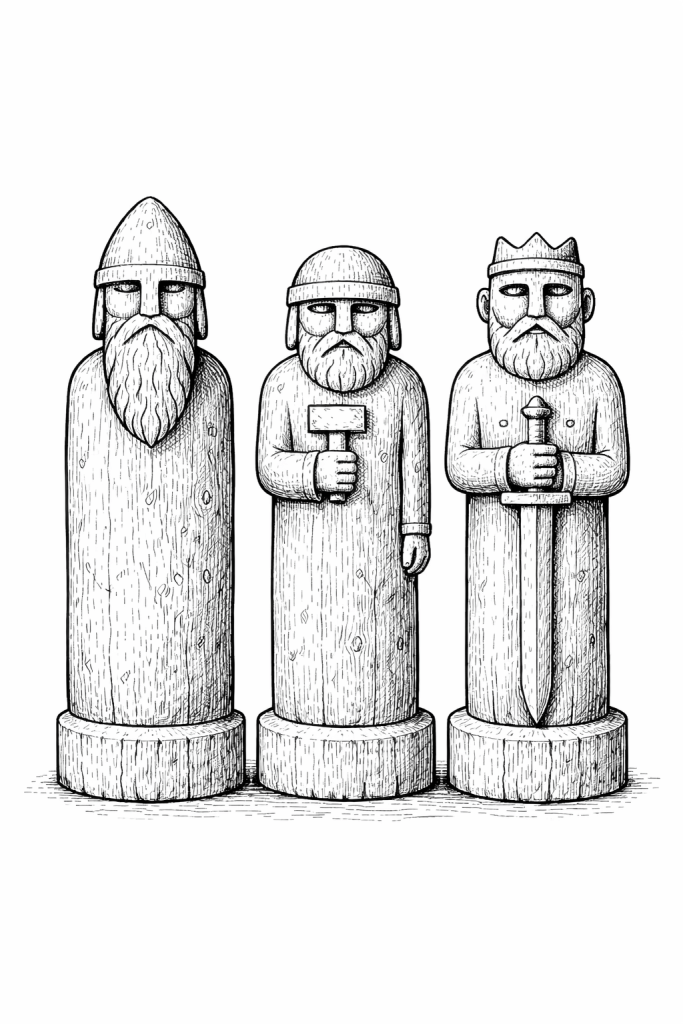
At its simplest, polytheism means belief in or worship of many gods rather than only one. In a Heathen context, that usually means that beings such as Odin, Thor, Freyja, Freyr, Tyr, Frigg, and others are understood as real divine persons or powers worthy of reverence, offering, prayer, and relationship. Modern Pagan philosophy commonly describes Pagan religions, including Heathenry, as broadly polytheistic and animistic, meaning they involve many divine beings and a world alive with other-than-human presences as well.[1]
For many Heathens, polytheism is not just a number-counting exercise. It is a way of understanding the world as plural. Different gods have different characters, associations, stories, and relationships with human beings. A person might turn to Thor for protection, Freyja for love or beauty, Freyr for prosperity, or Odin for wisdom, poetry, or ecstatic insight. Even when different households emphasize different deities, the wider divine world is still understood as populated by many beings rather than organized around a single exclusive god.[2]
Hard polytheism and soft polytheism
Within Pagan and Heathen discussions, people sometimes distinguish between hard polytheism and soft polytheism. These are not ancient categories; they are modern ways of explaining how someone understands divine plurality. In the most common usage, hard polytheism means that the gods are truly distinct individuals. Thor is Thor, Freyja is Freyja, and they are not simply masks of a single larger deity. Soft polytheism, by contrast, usually means that many gods may be understood as aspects, faces, emanations, or culturally shaped expressions of a deeper divine unity.[1][3]
In practice, many Heathens lean toward hard polytheism, because it fits well with the tone of the myths and with devotional life: one makes offerings to specific gods as specific persons. But not every Heathen feels the need to define things so sharply. Some people are comfortable saying that the gods are distinct in worship even if the deeper metaphysics are mysterious. Others are content to say that the gods may be both unique and somehow connected at a level humans do not fully grasp.[1][3]
It is also worth noting that “soft” and “hard” are descriptive labels, not grades of correctness. They help explain differences in theology, but they do not settle them. Many Heathens never use either term at all. They simply worship the gods and leave the philosophical sorting-out for later, or never feel the need to sort it out in a formal way.[3]
Atheism, agnosticism, and non-doxastic Heathenism
Not every Heathen approaches the gods through firm belief. Some are agnostic about whether the gods literally exist as independent beings. Some are effectively atheist Heathens, meaning they participate in Heathen ritual, culture, ethics, or community without affirming literal supernatural belief. Others take what philosophers call a non-doxastic stance: they may not claim certainty or even full belief, but they still treat the gods as a live religious possibility and engage in practice through hope, reverence, openness, or disciplined uncertainty. Carl-Johan Palmqvist argues that this kind of non-doxastic Paganism is philosophically viable, even when outright certainty is absent.[4]
In ordinary community life, this means a person can be meaningfully Heathen even if their theology is unsettled. One person may say, “Thor is real.” Another may say, “I do not know what Thor is, but I pray anyway.” Another may say, “The gods are powerful symbols through which I approach life, ancestry, and the world.” Those people will not agree on every theological point, but they may still stand together in ritual and community.[4]
Can a Heathen be monotheistic?
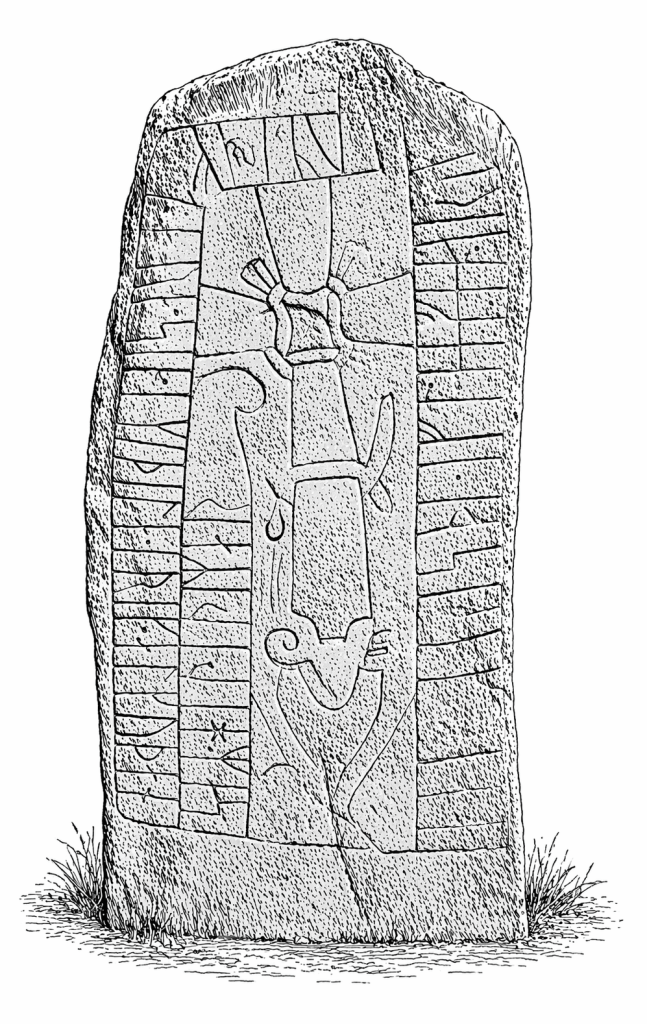
At first glance, monotheism and Heathenism seem incompatible. Monotheism means belief that only one God truly exists, while Heathenism is historically and usually practically tied to a plural divine world. So if someone is a strict monotheist in the classic sense, they are not describing Heathen theology in the usual way. Modern scholarship on Pagan religion generally presents Pagan traditions as polytheistic rather than monotheistic.[1]
Even so, real people do not always fit neat categories. Some live in a blended or transitional space where they identify with Heathen practice, symbols, or ritual life while still retaining Christian belief. Others may honor Heathen gods while understanding them in a framework subordinate to one highest deity. Still others come from Christian backgrounds and continue to hold parts of Christian theology alongside Heathen practice. This is better understood as mixed practice or syncretism than as the standard theology of Heathenism itself.[5][6]
So the clearest way to say it is this: Heathenism is not normally a monotheistic religion, but some individuals who participate in Heathen life are also Christian, Christian-influenced, or otherwise theologically mixed. That is unusual enough to need explanation, but common enough that it should not be surprising to anyone familiar with modern Pagan religious life.[5][6]
What syncretism means
Syncretism is the mixing, blending, or combining of religious forms, ideas, symbols, or practices. Scholars use the word neutrally, even though in ordinary conversation it sometimes sounds like a criticism. In reality, syncretism is common throughout religious history. It can happen when cultures meet, when older and newer traditions overlap, or when individuals inherit more than one religious language and use both.[6][7]
For Heathens, syncretism can look like many things. It might mean using a ritual form influenced by another Pagan tradition. It might mean a household that honors both Heathen gods and Christian figures. It might mean drawing together Norse and Anglo-Saxon practices, or combining historical Heathen custom with folk Christianity inherited through family tradition. Some syncretic patterns are ancient as well as modern: the religious world of Germanic Europe was never as sealed off and perfectly uniform as people sometimes imagine.[6][7]
Syncretism is not embraced equally by all Heathens. Some welcome it. Some are cautious about it. Some reconstructionists work very hard to minimize it. But the idea itself is useful because it helps explain why modern Heathen practice does not look exactly the same from one household to another.[2][6]
The gods are not the whole story: ancestors and landvættir
When people first encounter Heathenism, they often focus entirely on the gods. But many Heathen households are just as concerned with ancestors and landvættir as with the gods themselves. Ancestors are the beloved dead: family, forebears, and sometimes non-blood kin or spiritual forebears who are treated as part of the household’s continuing web of relationship. Some Heathen communities explicitly note that “ancestor” does not have to mean a purely biological connection; it can also include those who shaped and formed you.[5]
Landvættir are land-wights or land spirits, the presences associated with place. In both historical and modern Heathen thought, they matter because Heathen religion is not only about gods “above,” but about right relationship with the world around you. Modern Heathen explanations often describe Heathen belief as involving not only gods, but also the spirits of ancestors, land, and home.[5][8]
Because of this, some households are not especially god-centered in day-to-day practice. Their religious life may revolve more around the dead of the family, the spirits of house and land, seasonal rites, and the maintenance of peace and reciprocity at home. That does not make them less Heathen. It simply shows that the sacred world of Heathenism is wider than a list of major deities.[5][8]
A primary god, without denying the others
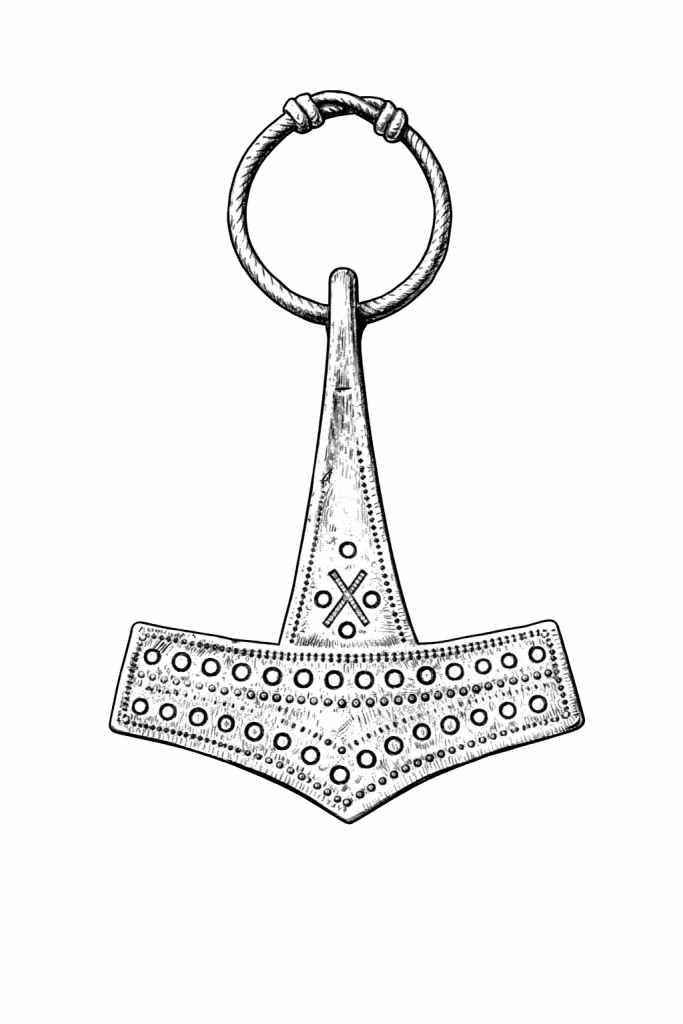
Another very common pattern in Heathen practice is devotion to a primary god. A household may feel especially close to Thor, Freyja, Odin, Frigg, Freyr, or another deity, and that god may receive the most attention at the home altar, the most frequent offerings, or the strongest devotional language. Modern Heathen teaching materials often note that no one is required to worship every god equally, and that most people in practice focus on a smaller number of deities more regularly.[2]
That does not usually mean the household denies the reality of the other gods. More often, it means the home has a center of gravity. A family may chiefly keep Thor on the household altar for protection and blessing, while also honoring Freyr at harvest, Freyja in family or relationship matters, and the ancestors at specific times of year. This kind of focused devotion inside a wider polytheistic world is extremely common and makes practical sense: people build deeper relationships with some divine beings while still acknowledging the broader sacred community.[2]
Divinity in Heathenism is relational
If there is one theme that ties these approaches together, it is that Heathen divinity is often understood relationally. Heathens do not always begin with a creed and work outward. Many begin with relationships: with a god, with several gods, with the dead, with the local land, with ritual practice, or with inherited stories that gradually become religiously alive. That is one reason theological variety persists so easily in Heathenry. People are often united less by one mandatory metaphysical formula than by a shared sacred world and a shared pattern of reverence, reciprocity, and obligation.[1][5]
Conclusion
So what does Drengsiðr Heathenism believe about divinity? The simplest honest answer is: more than one thing. Heathenism is usually polytheistic, often animistic, and frequently relational in practice. Some Heathens are hard polytheists. Some are softer in their theology. Some are agnostic or atheist in outlook but still fully engaged in Heathen community or ritual life. Some households center a major god, while others give equal or greater attention to ancestors and landvættir. Some people are strictly Heathen, while others practice in openly syncretic ways, including forms of overlap with Christianity.[1][4][6]
That diversity can look messy from the outside, but it is also one of the strengths of the tradition. It allows Heathenism to be not just a revived religion of old names, but a living religion of many kinds of sacred relationship.[1][5]
Footnotes
[1] Eric Steinhart, Contemporary Pagan Philosophy (Cambridge University Press excerpt). Useful for the broad framing of contemporary Pagan religions as polytheistic, animistic, and philosophically diverse.
[2] The Troth, “Gods.” Used here for practical modern Heathen explanations that most Heathens worship many gods, but in ordinary life usually focus on only a handful rather than all equally.
[3] Modern Pagan discourse often uses “hard polytheism” and “soft polytheism” as explanatory labels for whether gods are understood as fully distinct persons or as expressions of a deeper unity. This article uses those terms descriptively rather than as fixed doctrinal categories. The broader philosophical diversity of Pagan theology is reflected in Steinhart’s overview.
[4] Carl-Johan Palmqvist, “The old gods as a live possibility: on the rational feasibility of nondoxastic paganism,” Religious Studies. Palmqvist argues that non-doxastic Paganism is philosophically viable even when outright belief is absent or uncertain.
[5] The Troth, “Beliefs of Ásatrú, Heathenry and Norse Paganism.” Used here for the practical point that many Heathens explicitly include gods, ancestors, land spirits, and home spirits within their religious worldview.
[6] J. D. Y. Peel, “Syncretism and Religious Change,” Comparative Studies in Society and History. A foundational scholarly discussion of syncretism as religious mixing rather than a simple impurity of belief.
[7] David Frankfurter’s Brill encyclopedia work on syncretism and related scholarship on religious change are useful for understanding syncretism as a normal process in lived religion rather than an exceptional corruption of “pure” traditions.
[8] The Troth, “Spirits,” together with its broader beliefs page, reflects a common modern Heathen understanding that land spirits, house spirits, and ancestor spirits may be central to practice, sometimes even more immediate than theological speculation about the gods.
 Drengsiðr
Leave a comment