Our Worldview: A Foundation of Action
While Drengsiðr is a path defined by honorable action, our deeds are guided by a core set of beliefs rooted in the Norse tradition. We are a polytheistic faith, meaning we honor many gods, spirits, and ancestors, seeing them as kin and elder allies rather than distant masters. We also acknowledge for some that these same gods, spirits, and ancestors are more like archetypes within ourselves and others but are celebrated all the same.
Our doctrine is not a rigid set of rules demanding blind faith. Instead, it is a framework for understanding the world and our place within it. We prioritize orthopraxy (right practice) over orthodoxy (right belief), teaching that a person’s character is revealed through their commitments and conduct, not by their adherence to a specific theological dogma. However, we believe that right action naturally flows from a well-grounded worldview.
The Three Kindreds: Gods, Spirits, and Ancestors
Our spiritual practice is built upon fostering relationships with three main categories of venerable beings, we call the Three Kindreds. Whether understood as distinct external entities or as profound archetypes that shape our inner and outer worlds, our respect for them remains the same.
Kindred
Gods, Goddesses, & Jǫtnar
Description
This includes the Æsir and Vanir—like Odin, Frigg, Thor, and Freyja—as well as the Jotnar. Whether seen as literal beings or as the ultimate archetypes of order, creation, and chaos, they represent the great forces that shape the cosmos. We recognize that these powers are complex and ancient, embodying wisdom, might, and natural truth. Drengsiðr does not forbid the honoring of Jotnar, as they too offer profound lessons about reality and resilience.
Our Relationship
We honor these powers through offerings and by striving to embody their greatest virtues. We seek to align with these foundational principles, whether by seeking the favor of the Gods or by integrating their archetypal strengths into our own character.
The Landvættir (Spirits of the Land)
The Landvættir represent the life-force of the natural world. Whether viewed as distinct spirits inhabiting the land or as the psychological and ecological “soul” of a place, they are the guardians of their domain. Acknowledging them is an act of respect and a recognition that we are participants in the world, not its masters.
We seek to live in right-relationship with the local Landvættir through offerings and respectful conduct. This practice fosters both a spiritual connection and a deep ecological awareness, ensuring our actions do not cause undue harm to the places we live and work.
The Ancestors
Our ancestors are the honored dead who came before us. This includes ancestors of blood, adoption, and choice. They can be understood as spirits who watch over us, or as the collective archetypes of our heritage whose strengths and struggles are imprinted upon us. We also venerate the ancestors of our path—the long line of those in our profession or calling.
We venerate our ancestors by remembering their deeds and making offerings. By doing so, we draw strength from our lineage—be it familial or professional—and seek to embody the honor of those who laid our path, adding to their legacy for those who will follow us.
Oaths and Oath-making
In the old Norse and Germanic world, an oath was not casual speech. It was a public and binding act that joined a person’s word to honor, witness, and sacred obligation. A man’s reputation was built by whether his word proved firm.
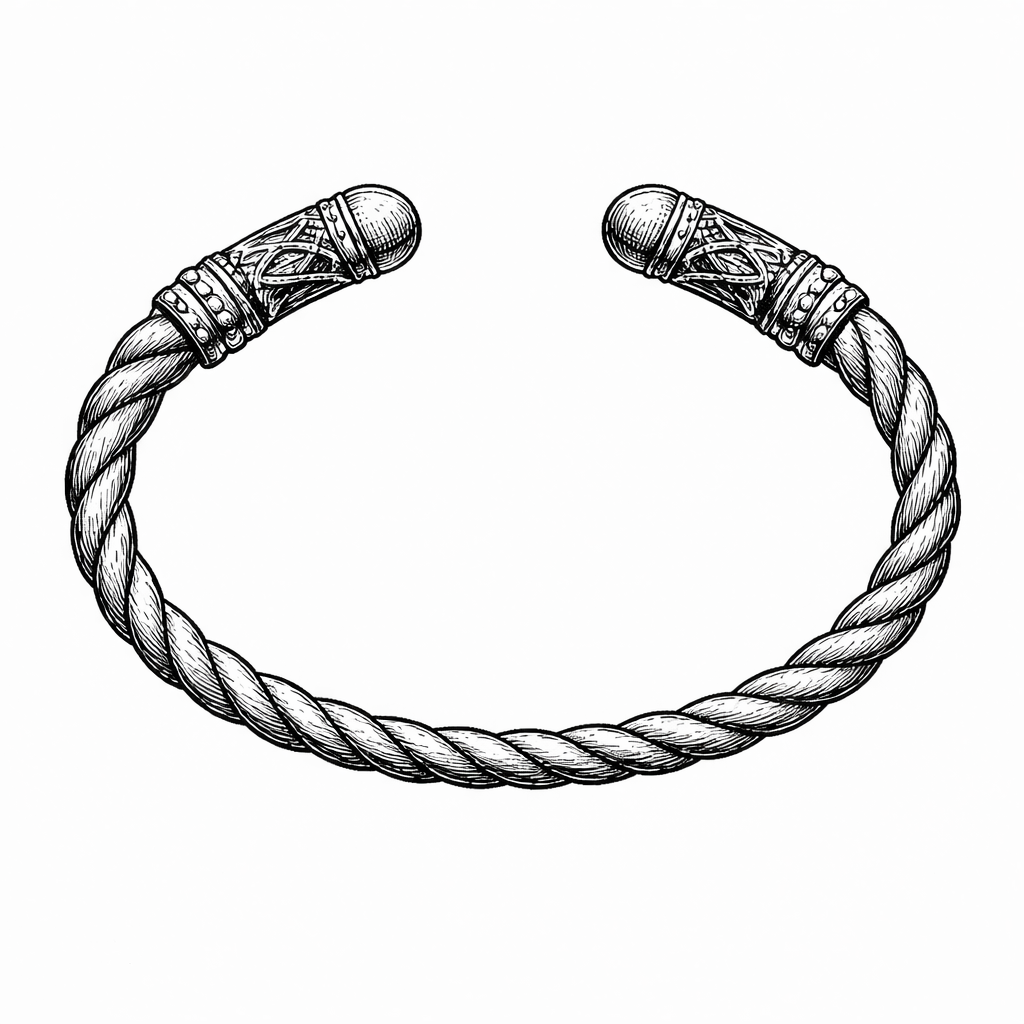
The sources show that oaths were made solemnly. In Eyrbyggja saga, all oaths are sworn upon a sacred temple ring. In Víga-Glúms saga, the oath-taker lays his hand upon a blood-reddened silver ring, names witnesses, and speaks the oath aloud. In Landnámabók, the legal oath sworn on the ring binds a man to speak and judge according to what is most right, most true, and most lawful. At Yule, Helgakviða Hjörvarðssonar describes men laying their hands upon the sacred boar and making great vows at the ceremonial toast.
Because the sacred ring appears so prominently in oath-taking, many modern Heathens wear an arm-ring or oath-ring as a visible reminder that one’s word should carry weight. While this is a modern devotional and cultural practice rather than something required by all historical sources, it grows naturally from the old image of the ring as a sacred object associated with sworn promises, public witness, and personal honor.
The old poems also show the moral weight of oath-breaking. In Atlakviða, violated oaths are remembered as grave betrayal. In Hávamál, after a ring-oath is broken, the question is asked: who can trust such a man’s troth? That is the heart of the matter. To break one’s sworn word is not only to fail in a promise; it is to wound trust, stain honor, and diminish one’s name.
Drengsiðr therefore teaches that oaths must be made with seriousness, restraint, and full intention to keep them. One should not swear lightly. But what one does swear, one must hold. Reputation is built by truthfulness, steadiness, and faith kept over time. This final principle is a modern doctrinal application drawn from the old sources.
Appearance, Bearing, and Self-Respect
In Drengsiðr, outward presentation is not treated as vanity. It is part of character made visible. The old sources do not teach that worth is measured by wealth or ornament, but they do show that grooming, composure, and personal bearing mattered. In Hávamál, a man is told to come to the assembly “washed and fed,” even if he is not finely dressed. He should not be ashamed of plain shoes, plain breeches, or an ordinary horse. The lesson is not luxury, but dignity: one should appear clean, orderly, and self-possessed before others.
The wider Germanic record reinforces this same principle. Tacitus says that among the Chatti, men let the hair and beard grow from manhood onward and did not lay aside that form until they had slain an enemy. He also describes hair among the Suebi as a visible sign of status and freedom. In that world, appearance was not trivial. Hair and beard were marks of maturity, reputation, discipline, and standing. A man’s name was carried not only in what he said, but in how he bore himself before friend and foe alike.
Norse literary culture treats the beard in the same way. In Njáls saga, Njáll’s lack of a beard is used as a serious insult, and his household is mocked with beard-based slurs. This shows that the beard was bound up with masculine honor and public reputation. In the same honor-world, nið (a defamatory insult of dishonor and unmanliness) was no light matter. To attack a man’s masculine standing was to attack his name.
The legal tradition supports this as well. Grágás treats acts done to disgrace a man’s appearance as grave offenses, and scholarship on Old Norse shame language cites the law’s protection against humiliating acts such as cutting hair from a person’s head, putting his appearance in disorder to shame him, or otherwise disgracing him publicly. Related Nordic legal material also preserves compensation for injury to the cheek or beard. Taken together, the laws show that hair and beard belonged to the protected sphere of a man’s public dignity. Pulling or damaging a man’s beard was not treated as nothing; it belonged to the realm of punishable dishonor.
Archaeology points in the same direction. The National Museum of Denmark notes that hair and beard were of major importance to Viking men and that combs are among the most common Viking Age finds, alongside other grooming tools, showing that care for one’s appearance was ordinary rather than exceptional. Research on Viking Age grooming similarly emphasizes the social importance of hair and beard care, and even Ibn Faḍlān’s often-cited account of the Rus describes them washing the face and hair and combing themselves as part of a repeated routine, despite his criticism of their habits. The issue, then, is not ornament for its own sake, but order and visible self-command.
The old poems also show that bearing is demonstrated in more than grooming alone. Hávamál repeatedly praises measured speech, restraint, composure, and freedom from shame. A worthy person is not ruled by boastfulness, drunken foolishness, or loose talk. He knows how to speak well, answer well, host well, and carry himself with moderation among others. Bearing, then, includes not only cleanliness and beard, but posture, speech, courtesy, steadiness, and command of one’s tongue. Fair fame belongs to the one who carries himself rightly.
For that reason, Drengsiðr teaches that men should wear the beard where physically possible, as an expected sign of masculine dignity, mature bearing, and honorable reputation. This expectation is applied with realism and charity toward those unable to grow one. In the same spirit, all adherents are expected to keep themselves clean, orderly, and presentable; to speak with restraint; to carry themselves with steadiness; and to show self-respect through visible discipline rather than slovenliness or vanity. Outward bearing should reflect inward order. This final expectation is a modern doctrinal application drawn from the old sources and the values they consistently display.
Frith and Community
Community is not an optional social accessory to the faith. It is one of the places where the faith is lived. The old Germanic and Norse idea of frith is often translated simply as “peace,” but it carries a fuller sense of right relationship, social order, mutual protection, and the conditions under which people can live together honorably. Modern Heathen writers commonly describe frith as the web of relationships that sustains peace and the common good, and that understanding fits well with the older legal and literary world in which peace was not mere quiet, but an achieved and guarded condition.
The old poems show that such a life begins in conduct toward others. Hávamál opens with the duties of host and guest: the newcomer is to be welcomed, given fire, food, and the chance to dry and warm himself. Later the poem says that a man should be cheerful with his guest, mindful, eloquent, and speak of good things if he would be counted wise. These teachings show that community is built through hospitality, civility, and the willingness to make room for others in ordered fellowship. Frith is not passivity. It is maintained through disciplined conduct that makes shared life possible.
Hávamál also connects frith to friendship, reciprocity, and trust. “A man should be a friend to his friend, and repay gift with gift,” and if he has a trusted friend he should go often to him, share his mind, and maintain the bond. Friendship in the old poems is not sentimental; it is active, sustained, and proven through exchange, honesty, and presence. Community survives when goodwill is practiced, not merely professed.
The legal and saga world shows the other side of this principle: frith had to be protected because disorder and feud could tear communities apart. Icelandic law and kin-based custom placed heavy weight on settlement, compensation, and the obligations of kindred, because peace within a people was too important to leave to impulse. The goal was not weakness, but the restoration of order. Frith therefore does not mean the absence of strength; it means strength governed toward the preservation of rightful relationship.
Frith is a sacred social duty. It is built through hospitality, oath-keeping, truthfulness, self-restraint, reciprocity, and care for the household and the fellowship. It is damaged by treachery, needless quarrels, loose tongues, dishonor, and the refusal to bear one’s share of communal obligation. To live in frith is not merely to avoid conflict. It is to help create a community in which trust can grow, households can stand firm, guests can be welcomed, and people can live together with dignity. No one becomes honorable alone; reputation is tested in community, and frith is the social form of honor lived together.
Reciprocity and the Gifting Cycle
Relationships are not sustained by feeling alone. They are maintained through reciprocity: the giving and receiving of honor, hospitality, help, loyalty, and offering. The old poems present this principle plainly. In Hávamál, friendship is preserved when people “give and give again,” and a person is told to repay gift with gift, laughter with laughter, and to visit often the friend he trusts well. The point is larger than generosity in the narrow sense. Bonds endure when they are fed. What is given rightly creates obligation, gratitude, and continuing relationship.
This same logic reaches beyond friendship into the sacred life. In the old Scandinavian record, sacrifice and offering were tied to the hope for peace, good seasons, fertility, and victory. In Ynglinga saga, seasonal sacrifices are said to be held for a good year, a good crop, and victory in battle. In Hákonar saga góða, the local farmers and villagers demand that the king take part in sacrifice “for peace and a good year.” These sources show that offering was not empty display. It was part of a reciprocal relationship in which people honored the gods and sought blessing in return.
Reciprocity also governs community life. Gifts, hospitality, loyal aid, and faithful speech all create and renew obligation between people. A household that receives a guest must answer with welcome. A friend who is trusted must be answered with presence and exchange. A leader who receives loyalty must answer with protection, generosity, and right judgment. The gifting cycle is therefore not merely material. It includes all those acts by which trust is nourished and a relationship is kept alive.
Drengsiðr therefore teaches that gratitude must take visible form. We do not merely admire the gods; we honor them with prayer, offering, and rite. We do not merely claim friendship or fellowship; we strengthen it through loyalty, generosity, hospitality, and the keeping of our obligations. To receive and never return is a failure of character. To give fittingly, receive thankfully, and answer rightly is part of drengskapr. The gifting cycle is one of the ways frith is built, devotion is sustained, and worthy relationships are made durable.
Wyrd and the Concept of Fate
Fate is not understood as helpless surrender to inevitability. The old Norse and wider Germanic tradition presents a world in which lives are shaped by forces greater than any one person, yet also by deeds, choices, loyalties, and consequences. In Old English this is often called wyrd; in Old Norse, closely related ideas appear in Urðr and ørlög. Modern Heathen explanation commonly describes wyrd as the larger web of conditions and consequences, and ørlög as the particular pattern laid down from that web.
The poetic sources place this idea under the care of the Norns. In Völuspá, three mighty maidens come from the well beneath the world-tree: Urðr, Verðandi, and Skuld. There they “laid down laws,” “chose lives,” and marked out the fates of the children of men. In Gylfaginning, Snorri likewise says that the Norns shape the lives of men, and that norns come to each child at birth to appoint that life. Fate, then, is not portrayed as chaos. It belongs to the deep order of the world.
Yet the old wisdom poems do not teach passivity. Hávamál repeatedly insists on prudence and foresight. A person is warned to be watchful, measured, and thoughtful in conduct because actions have consequences. The poem assumes that character matters, judgment matters, and what one does now will shape what follows. Fate may set conditions, but it does not excuse folly.
For that reason, Drengsiðr teaches that wyrd should not be treated as an excuse for weakness or fatalism. A person does not control all circumstances, inheritance, or fortune. But a person does help shape the path ahead through oath-keeping, courage, restraint, sacrifice, loyalty, and disciplined conduct. What has been laid down matters; what one lays down in turn matters also. In this way, fate is both received and answered. This application closely follows modern Heathen interpretations of wyrd and ørlög as consequence, context, and the shaping power of action across time.
Drengsiðr therefore rejects both arrogance and passivity. We do not imagine that we stand outside the woven order of things, free from consequence or inheritance. But neither do we believe that honor is meaningless because all is fixed. Rather, we hold that a worthy person meets what is given with courage and shapes what can still be shaped with wisdom, duty, and strength of character. The old world’s teaching on fate is not an invitation to resignation. It is a call to live seriously in a world where deeds endure.
Reputation and Drengskapr
In Drengsiðr, the religious life is not hidden from the world. It is made visible in the kind of name a person builds over time. The old wisdom teaches that wealth fades, the body dies, and all earthly things pass, but a good reputation endures after death. For that reason, Drengsiðr holds that a worthy life must be lived in such a way that one is well spoken of with justice. Reputation is not vanity, nor the pursuit of applause. It is the public witness of proven character.
This is the heart of drengskapr: honorable worth made manifest in conduct. A person does not become reputable by words alone, but by the steady union of appearance, bearing, speech, oath-keeping, loyalty, courage, discipline, hospitality, and right dealing with others. Reputation is strengthened by the visible signs of dignity, by firmness of word, by steadfastness in duty, and by conduct that proves them dependable.
The old world remembered such people with praise. Men were called drengr when they proved themselves honorable, loyal, and worthy under strain. Women likewise stood fully within that same world of esteem and memory, praised for wisdom, dignity, beauty rightly borne, intelligence, capability, and fair fame. Lasting reputation was never only a matter of outward appearance, nor only a matter of inward intent. It was the full pattern of a life: how one stood, how one spoke, how one kept faith, how one treated kin and guest, how one met hardship, and whether one’s name deserved to endure.
Drengsiðr therefore teaches that every adherent should seek to build a name worthy of remembrance. Reputation is shaped through self-presentation, through oath-keeping, through hospitality, through courage, through discipline, through devotion, and through service to the household and the community. It is guarded by restraint and ruined by shameful conduct. It is strengthened each time a person does what is right when it is difficult, costly, or unseen.
To live with drengskapr is to live deliberately under the knowledge that one’s name is always being formed. It is to understand that reputation is earned, not claimed; embodied, not imagined; remembered, not declared. The aim of Drengsiðr is therefore not merely belief, but the cultivation of people whose lives are worthy of trust, whose conduct brings honor to their households and fellowship, and whose names may rightly be spoken with respect after they are gone.
Deyr fé,
deyja frændr,
deyr sjalfr it sama.
En orðstírr
deyr aldregi,
hveim er sér góðan getr.Deyr fé,
deyja frændr,
deyr sjalfr it sama.
Ek veit einn,
at aldri deyr:
dómr um dauðan hvern.
Cattle die,
Kinsmen die,
You will die the same.
But glory
will never die,
For the one who can get it.
Cattle die,
Kinsmen die,
You will die the same.
I know one thing
that will never die:
the reputation of the dead.
–Hávamál (Words of the High One)

